
How to Become an Astronaut at NASA
Dreaming of Space? Here’s Exactly How to Become an Astronaut at NASA
Becoming a NASA astronaut is a dream for many space enthusiasts and STEM professionals around the world. People often search for how to become an astronaut at NASA, astronaut qualifications, and NASA astronaut requirements in 2025. To qualify for NASA astronaut selection, applicants must meet education, experience, and physical fitness standards. Keywords like NASA astronaut training program, astronaut candidate application process, how to join NASA as an astronaut, space exploration careers, astronaut physical test, astronaut education path, and NASA career opportunities are essential for SEO. Many readers are curious about how long it takes to become an astronaut, the salary of a NASA astronaut, astronaut lifestyle in space, astronaut mission training, and NASA’s Artemis Program. Those planning a career in space science or engineering should also explore STEM degrees for astronauts, NASA internships, aerospace engineering jobs, space research careers, and astronaut recruitment 2025. Including related search terms such as how to apply for NASA astronaut jobs, NASA astronaut selection process, astronaut height and weight requirements, how to train like an astronaut, and NASA astronaut physical exam helps attract more organic traffic. People also look for NASA astronaut training center Houston, astronaut interview questions, how to become a space scientist, how to become a pilot astronaut, and NASA space exploration missions.

Becoming an astronaut with NASA is among the most challenging, prestigious, and inspiring career paths imaginable. It requires deep technical knowledge, exceptional physical and mental fitness, strong teamwork and leadership skills, and a purposeful commitment to exploration — especially now as NASA moves into the era of the Artemis Program and human missions beyond low-Earth orbit. This article will take you through what it takes: the requirements, the preparation, the application process, the training, and what to expect after selection.
1. The Big Picture: Why Become an Astronaut?
From the earliest Mercury missions to the modern International Space Station (ISS) era and onward to lunar and Martian ambitions, NASA’s astronaut corps plays a central role in human exploration. The term “astronaut” itself comes from Greek roots meaning “star sailor,” reflecting that we are venture-travelers beyond Earth’s atmosphere. (NASA)
For NASA right now, astronaut candidates are being recruited to support deep-space exploration: missions to the Moon’s south pole, long-duration stays in lunar orbit, and eventual missions to Mars. (NASA)
So, when you aim to become a NASA astronaut, you’re signing up not just for the ride, but for an extreme adventure of science, exploration, and teamwork in the harshest environment humans have encountered.
2. Baseline Eligibility Requirements
Before diving into extra preparation, you need to meet the baseline eligibility criteria. Meeting the minimums doesn’t guarantee selection—but without them, you won’t even be considered.
2.1 Citizenship
You must be a United States citizen. (NASA)
2.2 Educational Qualifications
Generally you must possess at minimum:
-
A master’s degree (or equivalent) in a STEM field — engineering, biological science, physical science, mathematics, computer science. (NASA)
-
Alternatively, you may substitute: two years of work toward a doctoral program in a STEM field, a completed MD or DO (medical degree), or completion of a nationally recognized test pilot school program. (NASA)
2.3 Professional Experience / Flying Hours
You must also have one of the following:
-
At least two years of related professional experience after your degree (or three years, depending on which era/announcement). Teaching experience (including K–12) counts. (NASA)
-
Or at least 1,000 hours pilot-in-command time in a jet aircraft (usually high-performance jet) if applying as a pilot‐astronaut. (NASA)
2.4 Physical Requirements
You must be able to pass NASA’s long-duration flight astronaut physical. Some specifics include: correctable vision to 20/20, blood pressure no higher than 140/90 sitting, and certain height requirements (historically between 62 and 75 inches). (NASA)
2.5 Other Qualifications
Beyond the written requirements, NASA looks for strong leadership skills, communications, teamwork, and adaptability. The environment of space and high‐stakes missions demand more than just technical ability. (NASA)
3. Preparing Far in Advance: What You Should Be Doing Now
If becoming a NASA astronaut is your goal, you should start preparing early—ideally during your school years and continuing through higher education and your career.

3.1 Choose the Right Educational Path
-
Focus on STEM fields: engineering, physical sciences (physics, chemistry, geology), biological sciences, computer science, mathematics. According to NASA guidance, not all STEM degrees are equal in preparing for astronaut roles. (NASA Jet Propulsion Laboratory)
-
Aim for excellence: strong GPA, field research, lab work, projects, internships.
-
Consider advanced degrees: a master’s degree is required; a doctorate or medical degree can strengthen your profile and may substitute for part of the experience requirement.
3.2 Gain Professional Experience
-
After graduation, secure positions that build relevant professional experience: engineering roles, research scientist positions, flight test, operations, mission control, or others that demonstrate technical responsibility and leadership.
-
If you’re inclined toward pilot/aviation route: military pilot training, test pilot school, jet aircraft time are valuable.
3.3 Build Complementary Skills
-
Leadership & teamwork: Because missions are crew-based in confined, high-stress settings, ability to perform as part of a team and lead when necessary is vital.
-
Communication: You’ll need to be able to explain complex technical matters clearly, interact with ground teams, cross-discipline communication.
-
Physical fitness & adaptability: Spaceflight is a physically demanding environment: microgravity, confinement, long duration. NASA suggests remaining active and healthy. (NASA)
-
Global/Multicultural awareness: Astronauts often work with international partners (e.g., on ISS). Language skills (especially Russian historically) may help.
-
Unique experience: Many successful candidates bring extra dimensions to their profiles: extreme environment operations (polar field work, undersea missions), robotics, spacecraft systems, advanced research, or other “first-of-kind” experience.
3.4 Start Early with Student and Outreach Opportunities
Even as a student, you can gain momentum:
-
Apply for NASA internships or co-ops. (NASA)
-
Participate in STEM clubs, competitions, science fairs.
-
Understand that your educational and early professional choices must align with NASA’s preference for STEM, mission-relevant experience, and strong performance.
4. Understanding the Selection Process at NASA
Meeting the minimum requirements is only the beginning. The selection process is highly competitive and rigorous. (NASA)
4.1 Application Announcement
NASA opens the application for the Astronaut Candidate program on an as-needed basis (roughly every 3–4 years). The last application cycle closed in April 2024. (NASA)
Your application typically includes: resume, transcripts, professional background, references, responses to questionnaires, perhaps assessments.
4.2 Initial Screening
Applications are reviewed for meeting the education, experience, citizenship, and physical criteria. Only those who pass screening advance. (NASA)
4.3 Interview & Testing
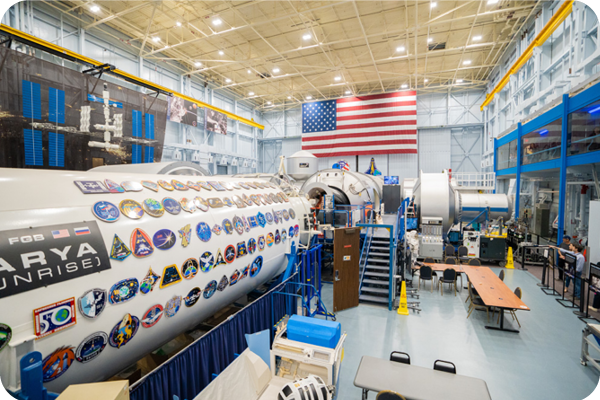
Selected applicants are invited to interview at NASA’s Johnson Space Center (Houston, Texas). There will be multiple rounds—this may include psychological testing, team-work assessments, leadership evaluation, physical tests, and further screenings. (NASA)
4.4 Final Selection
From thousands of applicants, only a handful are selected. For example: one recent class saw over 8,000 applicants for approximately 10 seats. (Reddit)
Selected individuals become “Astronaut Candidates.”
5. Astronaut Candidate Training
Once selected, you don’t immediately fly. You enter a rigorous training program before you become fully flight-eligible.
5.1 Basic Training (~two years)
Training includes:
-
Space station systems familiarization: how the ISS works (or other spacecraft), spacecraft operations, docking, life support, emergencies. (NASA)
-
Spacewalk (Extravehicular activity, EVA) training: underwater (Neutral Buoyancy Lab), robotic arm operations. (NASA)
-
Jet aircraft training: Many candidates fly the T-38 jet to maintain aerospace proficiency. (NASA)
-
Survival/ wilderness training: Because space missions involve contingencies, candidates may go through wilderness survival, water survival, altitude chamber experience. (NASA)
-
International partner coordination: Working with international space agencies, learning other languages (Russian historically), cross-cultural team training.
-
Mission-specific training: Science payloads, robotics, habitat systems for lunar missions, etc.
5.2 Qualification as Flight-Ready Astronaut
After successful completion of training, the candidate receives an “Astronaut” pin and becomes eligible for flight assignment. However—assignment is not guaranteed; astronauts may wait several years for their first mission depending on NASA’s manifest, mission objectives, availability, and individual qualifications.
5.3 Continuing Roles Between Flights
Even when not assigned to a flight, astronauts often:
-
Support mission development, spacecraft systems, science planning.
-
Serve in “ground roles” such as CAPCOM (capsule communicator) at Mission Control.
-
Train for future missions, maintain proficiency, engage in outreach and public-education.
6. Special Considerations in the Modern Era
As NASA moves toward the Artemis era and deep-space missions, there are additional factors to note.
6.1 Deep-Space / Lunar / Mars Missions
The demands of going beyond low-Earth orbit are greater: longer durations, higher risk, more autonomy, greater exposure to radiation, unfamiliar terrain (lunar surface, Mars surface). NASA explicitly states that future astronauts will conduct experiments where humans haven’t been before. (NASA)
6.2 Diversity of Background
While a STEM degree and technical experience remain core, NASA increasingly values diversity of backgrounds and experience. Science, engineering, medical, operations expertise, and leadership in challenging environments all matter. The key is relevancy and the ability to contribute uniquely to mission goals. (Space)
6.3 Competition and Standing Out
Given the extremely competitive selection process (less than 1% of applicants selected in some cycles) it’s vital to exceed the minimums. From public commentary by hopefuls:
“They are the top in their fields, have a ton of experience with research, have a strong background of critical thinking under extreme stress/life threatening situations …” (Reddit)
So, going beyond the baseline: leading projects, publishing research, operating in extreme environments (subsea, polar, high-altitude, aviation) help distinguish you.
7. A Practical Step-by-Step Roadmap
Here’s a practical roadmap for someone starting now and aiming toward becoming a NASA astronaut. Adjust timelines per your age, background, and resources.
Step 1: Foundation (High School → Undergraduate)
-
Focus on science, mathematics, computer science, engineering courses.
-
Join robotics clubs, science fairs, aeronautics/space clubs.
-
Stay physically active, build excellent fitness habits.
-
Choose a strong bachelor’s degree in a relevant STEM discipline.
-
Aim for research opportunities, internships, co-ops, undergraduate thesis.
Step 2: Advanced Education & Experience
-
Pursue a master’s (or doctorate) in engineering, science, or computer science (or consider medicine).
-
Gain professional experience: engineering roles, mission operations, aviation, flight test, research science. Focus on progressively responsible duties.
-
Consider military service if aviation/pilot route appeals. Flight test school is especially valued.
-
Seek assignments or roles in extreme environments (undersea, remote field campaigns, test deployments, space-analogue habitats).
-
Maintain outstanding physical fitness and undergo challenging training (scuba, altitude, survival training) where possible.
Step 3: Network, Leadership, Unique Profile
-
Take leadership roles in projects, field campaigns, or operational environments.
-
Publish technical papers, present at conferences, build team-based credentials.
-
Develop additional language skills (Russian, or other languages used in international space cooperation).
-
Get involved with NASA, space-industry networks, attend conferences, visit NASA centers, pursue internships or contractor roles.
-
Keep track of NASA’s astronaut announcement schedule; set alerts.
Step 4: Application and Selection
-
When NASA opens the Astronaut Candidate application, prepare a comprehensive package: transcripts, resume, supporting documents. Follow instructions precisely. (NASA)
-
Prepare for interviews: situational leadership examples, teamwork in adversity, explain technical contributions, demonstrate adaptability, communicate clearly.
-
Be ready for physical and psychological evaluation.
-
If selected, prepare for the 2-year training program.
Step 5: Training and Mission Assignment
-
During the astronaut candidate training period: absorb spacecraft systems, EVA, robotics, jet flight, survival training, international coordination.
-
After qualification: stay mission-ready, serve ground roles, build mission-specific expertise (lunar surface operations, deep-space habitat, etc.).
-
Once assigned to a mission: rigorous specialized training for your flight, simulation, science payloads, mission operations, physical conditioning.
-
After flight, continue to support NASA’s programs, possibly train for next assignment.
8. Challenges and Realities to Be Prepared For
It’s important to recognize the realities. While the dream is glamorous, the journey is demanding.
-
Extremely competitive: Thousands apply; only a small number are selected.
-
Long lead-time: From first career decision to flight assignment can be a decade or more.
-
Physical/medical demands: You must maintain excellent health and meet strict medical criteria. (NASA)
-
Risk and commitment: Spaceflight is high risk. Missions can last months; deep-space missions even longer. You commit to being away from home, living in constrained environments.
-
Uncertainty of assignment: Even after becoming a “flight-eligible” astronaut, you may wait years for a mission slot.
-
Adaptability required: Technology changes, mission profiles evolve, so continual learning is essential.
9. Beyond NASA: Alternate Paths to Space
While this article focuses on NASA, consider as well:
-
International space agencies (e.g., European Space Agency, JAXA, Canadian Space Agency) have their own astronaut selection programs.
-
Private commercial spaceflight companies are creating new “astronaut-type” roles (though not always the same as agency astronaut corps).
-
If you are a non-US citizen, explore those international agencies or partner programs.
-
Space-analogue training programs (undersea habitats, polar stations, Mars-simulation) can build relevant experience.
10. Final Thoughts
Becoming an astronaut at NASA is not just about fulfilling a checklist; it’s about cultivating an exceptional, resilient, and mission-oriented profile. It’s about being the kind of person who thrives under pressure, excels in teamwork, communicates clearly, adapts to extreme environments, and has a deep curiosity about our place in the universe.
Your path might look different depending on whether you aim for engineering, research science, medicine, pilot/aviation, or operations—but the underlying theme remains the same: aim high, prepare broadly, build diverse experience, stay physically and mentally strong, and never lose sight of the exploratory spirit.
As NASA says: when the time comes to launch the next explorers who will walk on the Moon or go beyond to Mars, they’ll be looking for people who are ready. (NASA)


